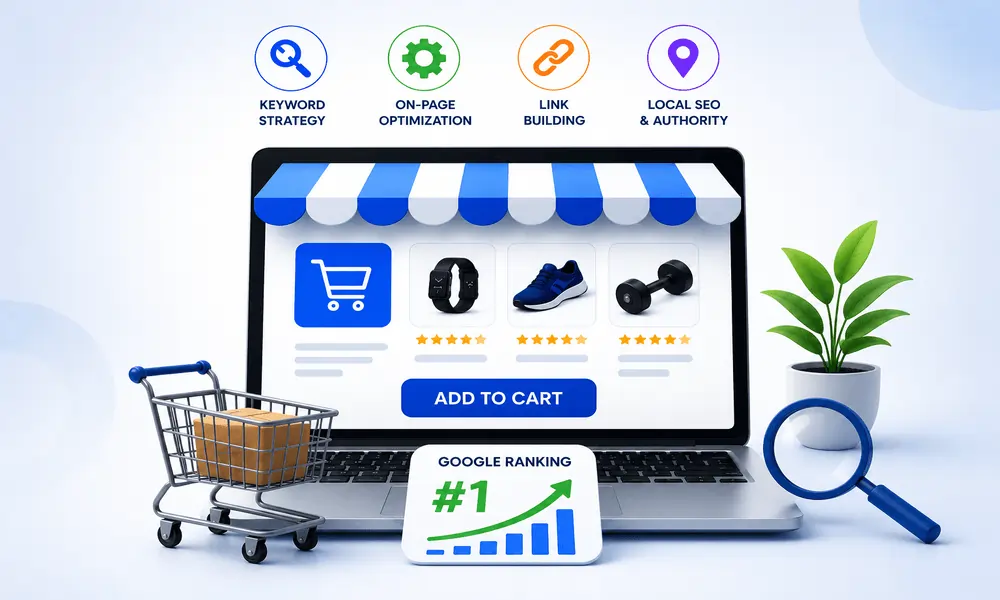
Are you struggling to get your online store noticed? You’re not alone. Thousands of ecommerce businesses find themselves buried on page three, four, or even deeper in Google search results. The frustration is real. Your products are great. Your prices are competitive. Yet customers can’t find you.
This is where ecommerce search engine optimization becomes your greatest business asset. The good news? You can start seeing real improvements in your search rankings in just 30 days if you follow a strategic approach.
Understanding the Ecommerce SEO Challenge
The modern ecommerce landscape is crowded. Big retailers dominate search results. Marketplaces like Amazon, eBay, and Shopify stores create massive competition for visibility. But here’s what most businesses don’t realize: Google actively wants to rank smaller, quality ecommerce sites higher. You just need to speak Google’s language.
Ecommerce SEO isn’t just about stuffing keywords into your product pages. It’s about understanding what customers actually search for, creating valuable content that answers their questions, and building trust signals that tell Google you’re a legitimate business worth ranking.
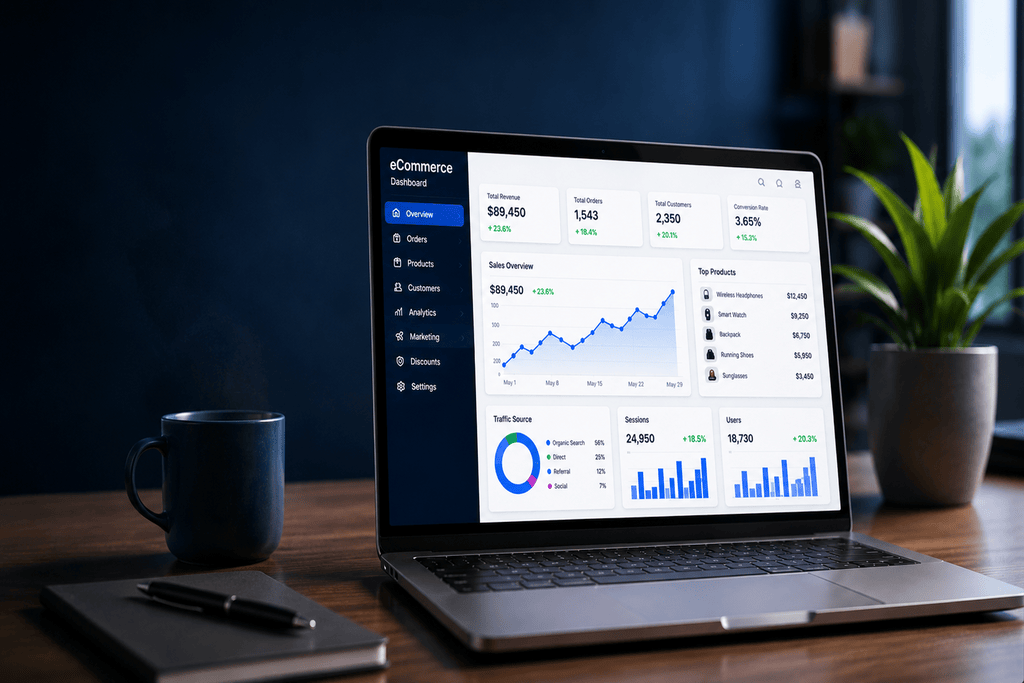
The three key barriers holding back ecommerce websites are:
Technical SEO issues that prevent search engines from crawling your site properly. This includes slow page load speeds, broken links, poor mobile optimization, and website structure problems.
On page SEO deficiencies where your product descriptions lack search-friendly optimization. Your titles don’t match what customers search for. Your meta descriptions don’t persuade clicks. Your content doesn’t answer buyer questions.
Off page SEO weakness because you haven’t built enough authority or backlinks. You’re not generating brand mentions. You’re not getting linked from relevant industry websites.
Each barrier is solvable. Within 30 days, you can address all three. You can also explore ways to boost shopify average order value to increase revenue while improving your overall ecommerce performance strategy.
Stage 1: Awareness Content that Attracts New Customers
Content educates potential customers who don’t yet know your brand. They’re searching for general information, comparisons, and educational guides. This is your chance to establish expertise and get eyes on your store.
Create Pillar Content for Your Niche
Start with broad topic research. If you sell fitness equipment, create pillar content around “home gym setup,” “best exercises,” or “fitness trends.” These attract high search volume and position your brand as an authority.
Your pillar page should be 2000 to 3000 words of comprehensive information. Include research, practical tips, and subtle references to your products without hard selling. Google rewards helpful content that keeps readers engaged. Each minute a visitor spends on your page is called dwell time, and it signals to Google that your content delivers real value.
Keyword research for awareness stage content focuses on informational search intent. People type “how to start a fitness routine,” not “buy dumbbells.” Use tools like Google Keyword Planner, Ahrefs, or Semrush to identify search terms with high volume and manageable competition.
Build Topic Clusters and Internal Linking
Topic clustering means grouping related content around a central pillar topic. If your pillar page is about home gyms, your cluster pages might cover “best resistance bands,” “weight lifting racks,” or “yoga mats for small spaces.”
Internal linking tells Google how these pages relate to each other. It distributes authority throughout your site and keeps visitors clicking deeper. When someone reads your home gym article and follows an internal link to your resistance band guide, that’s engagement Google rewards with higher rankings.
Use descriptive anchor text. Instead of linking with “click here,” use “best resistance bands for home workouts.” This tells search engines exactly what the linked page covers.
Optimize for Semantic Search
Google doesn’t just look at exact keyword matches anymore. It understands meaning, context, and user intent. This is semantic search and it’s the future of ranking.
When writing awareness content, include related terms and synonyms naturally. If your main keyword is “home gym,” also mention “home workout space,” “personal fitness setup,” and “workout room design.” Use the Google search box to see what related searches appear at the bottom. These are semantically relevant terms Google recognizes.
Latent semantic indexing keywords are words that frequently appear together in quality content. For home gym articles, you might naturally use terms like “resistance training,” “functional fitness,” “strength conditioning,” and “cardio equipment.” These aren’t forced. They appear naturally because they’re part of the topic.
Implement Schema Markup for Visibility
Schema markup tells search engines what your content is about. For awareness content, use Article schema markup. This helps Google display your article properly in search results and increases chances of appearing in featured snippets.
Add FAQ schema to your pillar pages. When someone searches “how to set up a home gym,” Google might pull your FAQ section right into the search result. This drives click through rates even when you’re not in position one.
Stage 2: Consideration Content that Builds Trust
Targets people who know they have a problem and are exploring solutions. They compare options, read reviews, and evaluate different products or approaches. This is where ecommerce sites gain major traction.
Create Product Comparison Content
Comparison content dominates when customers are deciding. They search for “dumbbells versus resistance bands,” “cardio machines for small spaces,” or “best affordable yoga mats.”
Write comprehensive comparison guides that don’t push your products. Instead, objectively analyze options. Mention competitors. Discuss pros and cons. This honesty builds trust and keeps readers on your site longer.
Most importantly, comparison content answers the specific questions preventing purchase decisions. Include comparison tables. Add photos showing differences. Explain which option works best for different situations.
Within your comparison content, naturally mention where readers can find these products. Your internal links to your ecommerce product pages become conversion points. The visitor came for information and discovered your store offers exactly what they need.
Optimize Product Pages for Keywords
Your product pages are where keyword optimization matters most. Every single product page should target specific commercial search intent keywords. These are the searches that actually lead to sales.
Product titles should include primary keywords while remaining descriptive. Instead of “Dumbbell Set,” use “Adjustable Dumbbell Set for Home Gym Strength Training.” This includes the primary keyword, modifier terms, and search intent signals.
Product descriptions should answer specific buyer questions: What’s this for? How do I use it? What makes it different? Why should I buy from you instead of competitors?
Include long tail keywords naturally. These are longer, specific phrases like “adjustable dumbbells for apartments with limited space” or “rubber coated dumbbells that won’t scratch floors.” Long tail keywords face less competition and convert higher because they indicate strong purchase intent.
Create Detailed Buying Guides
Buying guides drive massive traffic and conversions. Create guides like “The Complete Guide to Choosing Dumbbells,” “How to Buy a Home Gym on Budget,” or “Fitness Equipment Buying Guide for Beginners.”
These guides compare options, explain features, discuss pricing, and guide decisions. Include a section that naturally mentions your store’s selection. “Our store offers dumbbells in adjustable, fixed, and specialist varieties to match any workout style and budget.”
Use headers optimized for search intent. Headers should clearly state what information follows. “Dumbbell Weight Considerations,” “Dumbbell Materials Compared,” “Where to Buy Dumbbells for Best Value.” These headers target question based searches and increase featured snippet chances.
Leverage User Generated Content and Reviews
Customer reviews and testimonials are powerful trust builders. They answer common questions, build credibility, and provide fresh keyword content constantly.
Request reviews after purchase. Make the process simple. Respond to every review, especially negative ones. This shows customers you’re engaged and builds additional trust signals.
Aggregated review content works powerfully. Create pages like “Customer Favorite Products” or “Top Rated Items by Category.” Pull quotes and ratings from across your reviews. This creates unique content with semantic relevance to your products.
Reviews also provide natural long tail keywords. A customer review might mention “perfect dumbbells for apartment living” or “these resistance bands fit perfectly in my small bedroom.” These are search queries you’d never think of, yet real customers search for exactly them.
Stage 3: Decision Content that Converts
Content targets people ready to buy. They search for specific products, prices, deals, and reviews of your exact offerings. This is conversion time.
Product Page Technical Optimization
Every product page needs technical perfection. Mobile optimization is non-negotiable. More than 60 percent of ecommerce traffic comes from mobile devices. If your mobile experience is poor, you’re losing sales and hurting rankings.
Page speed matters enormously. Google considers Core Web Vitals: Largest Contentful Paint (how fast main content loads), First Input Delay (how quickly your site responds to interaction), and Cumulative Layout Shift (how stable your layout is while loading).
Compress images. Use a content delivery network. Enable browser caching. Minify CSS and JavaScript. These technical improvements might seem boring, but they directly impact rankings and conversion rates.
Optimize Conversion Funnel Pages
Create specific landing pages for high intent keywords. If customers search “buy adjustable dumbbells online,” they need a landing page dedicated to your dumbbells, not a generic category page.
Your landing page should have one clear goal: conversion. Include product image gallery, detailed specifications, customer reviews, pricing, and clear call to action buttons. Reduce friction. Every extra click reduces conversions.
A/B testing is crucial. Test different product titles, descriptions, images, and call to action button text. Small improvements compound. A 2 percent improvement in conversion rate might seem minor, but over 10,000 monthly visitors, that’s 200 additional customers annually.
Create Comparison to Alternatives
Decision stage content often compares your products to specific competitors. Customers search “your brand versus competitor brand” or “your product versus alternative product.”
Create honest comparison pages. Say when competitors offer advantages. Explain where your products excel. This approach converts powerfully because shoppers trust you’re not just trying to trick them.
Include specific product names, prices, and features. “Our dumbbells cost 20 percent less than competitor X while offering the same weight range and durability warranty.” This specificity builds credibility and targets high conversion searches.
Implement Conversion Focused Schema
Use Product schema markup for all ecommerce products. Include pricing, availability, ratings, and reviews. Google displays this information in search results, increasing click through rate.
Use LocalBusiness schema if you have physical locations across the USA. Include address, phone number, hours, and service areas. This helps customers find you whether they’re in California, Texas, or New York.
Add Offer schema to highlight sales and promotions. “Sale price 25 percent off” appears directly in search results when properly marked up.
Critical Technical SEO Foundations
These elements work across all content stages. Neglect them and your content won’t rank, no matter how great it is.
Fix Your Site Architecture
Google needs to understand your site structure. Create a clear hierarchy. Homepage leads to category pages. Category pages lead to subcategories. Subcategories lead to product pages. This pyramid structure helps Google crawl efficiently.
Breadcrumb navigation helps both users and search engines. A breadcrumb might read: Home > Fitness Equipment > Dumbbells > Adjustable Dumbbells. This clearly shows page relationships.
Keep category pages to 50 to 100 products maximum. When categories get too large, subdivide them. This improves user experience and helps Google understand relationships between pages.
Ensure Mobile First Indexing Success
Google primarily crawls and ranks the mobile version of your site. Make sure the mobile site is just as good as the desktop, or better.
Test mobile functionality. Touch buttons must be at least 48×48 pixels. Text must be readable without zooming. Images must display properly. Use Google’s Mobile Friendly Test tool for diagnosis.
Optimize Meta Data
Meta titles appear as clickable headlines in search results. Keep them under 60 characters. Include the primary keyword near the beginning. Make them compelling. A vague meta title gets fewer clicks than a specific, benefit focused title.
Meta descriptions appear below meta titles in search results. Keep them under 160 characters. Write them as persuasive sales copy, not keyword lists. A good meta description might read: “Discover adjustable dumbbells for your home gym. Full weight range, expert reviews, and fast shipping. Shop now.”
Handle Duplicate Content
Ecommerce sites often have duplicate content problems. The same product appears in multiple categories. Product pages have multiple URLs for sizing options or colors.
Use canonical tags to tell Google which version to prioritize. If a product appears in both “Cardio Equipment” and “Full Body Workout Gear” categories, choose one primary version and canonical tag the others to it.
Improve Site Speed Dramatically
Site speed directly impacts rankings and user experience. Most ecommerce sites load too slowly.
Run your site through Google PageSpeed Insights. It identifies exact problems. Common issues include unoptimized images, unused CSS and JavaScript, render blocking resources, and slow server response time.
Implement these fixes in order:
Compress and optimize all images. Use WebP format when possible. Serve different image sizes for different devices.
Eliminate render blocking resources. Move JavaScript to the end of the page or mark it as async. Defer non critical CSS.
Enable GZIP compression on your server.
Upgrade hosting if server response time exceeds 600 milliseconds.
Implement lazy loading for images below the fold. These load only when users scroll to them.
Off Page SEO and Authority Building
You could create perfect on page content, but without authority signals, ranking becomes nearly impossible. Off page SEO builds that authority.
Build Quality Backlinks
Backlinks are votes of confidence from other websites. Links from high authority sites tell Google your site is trustworthy.
Get relevant backlinks through:
Guest posting on industry blogs. Write helpful articles for fitness or wellness blogs. Include a link back to your site.
Broken link building. Find broken links on authority sites in your niche. Create content that serves the same purpose. Contact webmasters and suggest your content as a replacement.
Resource page links. Many websites maintain resource lists for their industry. Get your best guides listed.
Create link worthy content. Comprehensive guides, original research, tools, or data visualizations attract links naturally.
Generate Local SEO Signals
If Webtrack technologies serve customers across USA locations, implement local SEO to dominate location based searches.
Claim and optimize your Google Business Profile. Include accurate address, phone number, hours, and description. Encourage customer reviews. More reviews and higher ratings boost rankings in local search.
Create location specific content and pages. If you serve New York, California, and Texas, create content addressing each region’s unique needs.
Earn Brand Mentions
Unlinked brand mentions help SEO. When major websites mention your brand name without linking, Google takes notice.
Get mentioned in industry publications. Do original research and share findings with journalists. When publications cover your story, brand mentions follow.
Engage in industry discussions. Comment thoughtfully on forums. Contribute to industry conversations. Your brand gets mentioned.
Measuring Your 30 Day Progress
You can’t improve what you don’t measure. Set up tracking from day one.
Install Google Search Console
Search Console shows which keywords bring organic traffic, your average position in rankings, click through rates, and technical issues. Set this up immediately.
Monitor your selected keywords daily. You should see improvement within 7 to 10 days for some keywords.
Track search impressions. These count searches where your site appeared in results, whether users clicked or not.
Monitor Rankings Consistently
Use SEO tools to track keyword rankings daily. Record your position for target keywords.
Expect volatility. Rankings fluctuate, especially in the first 30 days. Don’t panic if you drop a position temporarily. Focus on the overall trend.
Measure Traffic and Conversion
Set up Google Analytics 4 properly. Track which pages get traffic, how long visitors stay, bounce rate, and conversion rate.
Create custom reports for organic traffic only. See exactly what SEO efforts produce in terms of visitors and customers.
What to Expect in 30 Days
Week one establishes foundation. Your site gets crawled. Google indexes new content. Most changes won’t show ranking improvements yet.
Week two shows subtle signals. Some newer content might rank on page two or three for target keywords. Traffic might increase slightly.
Week three brings real momentum. Pages optimized properly start ranking page one for long tail keywords. Conversion quality typically improves as more targeted traffic arrives.
Week four shows strong results. Your pillar content ranks higher. New content starts appearing. Most ecommerce sites see 30 to 50 percent organic traffic increase after 30 days of consistent optimization.
Common Mistakes that Hold Back Results
Keyword stuffing kills results. Using your keyword 15 times in a 500 word article signals manipulation to Google. Modern SEO uses keywords naturally, integrated in context.
Ignoring mobile experience tanks rankings. Google prioritizes mobile first indexing. A beautiful desktop site means nothing if mobile sucks.
Neglecting content freshness. Update old articles. Add new information. Google rewards recently updated content.
Forgetting about user experience. All the SEO in the world doesn’t matter if visitors immediately leave your site. Every page needs clear value, fast loading, and easy navigation.
Not building topical authority. Random articles about unrelated topics hurt ecommerce sites. Focus your content on your specific niche.
Actionable 30 Day Ecommerce SEO Roadmap
Day 1 to 5: Set up tracking. Audit your technical SEO. Install Search Console and Analytics. Identify your 20 target keywords.
Day 6 to 10: Fix critical technical issues. Improve page speed. Optimize robots.txt. Create XML sitemaps. Ensure mobile optimization.
Day 11 to 15: Create your pillar content. Write 2000 word guides for your main topics. Build topic clusters around pillars.
Day 16 to 20: Optimize existing product pages. Improve titles, descriptions, and internal linking. Add schema markup.
Day 21 to 25: Create comparison and buy guide content. Write reviews and testimonials. Build consideration stage content.
Day 26 to 30: Build backlinks. Create link worthy content. Reach out to industry partners. Optimize meta descriptions based on early data.
Looking Beyond 30 Days
Your first 30 days build a foundation. Sustainable rankings growth requires ongoing effort.
Continue content creation. Add one or two quality articles weekly. Build topical authority over time.
Monitor and adjust. Review Search Console data. Identify which keywords drive traffic. Create more content around high performing topics.
Build relationships. Connect with other industry websites. Generate natural link building opportunities.
Stay updated. Google makes algorithm updates frequently. Follow SEO news and adjust your approach accordingly.
Conclusion
Ecommerce SEO success isn’t mysterious or impossible. It’s systematic work across three areas: creating helpful content that addresses your audience’s questions, ensuring technical excellence so Google can crawl and index your site, and building authority through backlinks and brand mentions.
The 30 day timeframe delivers results because you’re combining quick wins with strategic foundation work. You’ll see ranking improvements, traffic increases, and conversion growth.
Start today. Implement these strategies. Track your progress. Within 30 days, you’ll have real momentum. Within 90 days, you’ll likely dominate your niche.
Your business deserves to be found by customers searching for exactly what you offer. Through systematic ecommerce SEO, you can make that happen. The only question is whether you’ll take action today.
Check this guide for Shopify store owners on how to design to help ecommerce businesses understand and apply proven SEO strategies quickly and effectively.
Written by experts serving ecommerce businesses across the USA, this guide applies proven strategies that work for stores regardless of size. Whether you’re based in California, Texas, New York, or any other state, these ecommerce SEO fundamentals will improve your visibility.