The Psychology Behind Doing SEO: 7 Tricks That Convert Visitors to Buyers

Every business owner has felt this frustration. You spend weeks building a website, writing content, and finally getting traffic from Google. People are visiting. But then… nothing. No calls. No signups. No sales. Here is the hard truth: getting traffic is only half the job. The real challenge is understanding why people click, why they stay, and more importantly, why they buy. That is where the psychology of SEO comes in. Search engine optimization is not just about keywords and backlinks anymore. Modern SEO is deeply connected to human behavior, decision-making patterns, and emotional triggers. When you understand how people think as they search, you can create content and web experiences that do not just rank, but actually convert. This article breaks down 7 proven psychological tricks that help turn casual visitors into paying customers, using the full marketing funnel from awareness to decision. Understanding the Buyer’s Journey Before You Write a Single Word Before diving into tactics, you need to understand one foundational concept. Every person who lands on your website is at a different stage of their decision-making process. Some are just learning about a problem. Others are ready to buy right now. The TOFU MOFU BOFU framework helps you organize your content to match exactly where someone is mentally. TOFU means Top of Funnel. These are people who are aware they have a problem but do not yet know the solution. MOFU means Middle of Funnel. These visitors are evaluating their options. BOFU means Bottom of Funnel. These are buyers who just need one final reason to say yes. Great SEO strategy content speaks to all three stages. When your pages match the intent behind a search query, Google rewards you with higher rankings, longer dwell time, and more organic visibility. Trick 1: Match Search Intent to Emotional State People do not search for products. They search for relief. A person who types “why is my website not getting sales” is not looking for a sales pitch. They are expressing frustration. They want to feel understood first. This is where search intent psychology becomes your most powerful tool. Google’s own algorithm is trained to identify whether a page satisfies user intent, not just whether it contains keywords. That means your content needs to open with empathy before it ever offers a solution. According to behavioral psychology research by Dr. Robert Cialdini, people make decisions based on emotion first and logic second. When your title, meta description, and opening paragraph speak directly to a pain point, your click-through rate increases and your bounce rate drops. Both of these are signals Google uses to measure content quality. Practical tip: Write your headlines by finishing this sentence out loud. “I want to find out how to…” That is your reader’s voice. Match it. Trick 2: Use Cognitive Fluency to Keep People Reading Cognitive fluency is a psychological term for how easily the brain processes information. Studies from the University of Michigan show that content which is easy to read feels more trustworthy and more intelligent to readers, even when the topic is complex. Simple sentence structure, short paragraphs, clear subheadings, and familiar language all improve cognitive fluency. For SEO, this directly affects dwell time, which is the amount of time a user spends on your page before going back to Google. Higher dwell time tells Google that your content is satisfying the search query. This is not about dumbing things down. It is about respecting your reader’s time and attention. Every sentence should earn its place. Trick 3: Build Trust With E-E-A-T Signals Google officially evaluates content using a quality framework called E-E-A-T, which stands for Experience, Expertise, Authoritativeness, and Trustworthiness. This framework is directly rooted in how humans decide whether to trust a source. When a visitor lands on your page during the middle of the funnel stage, they are comparing you to competitors. They are asking themselves, silently, “Can I trust this company?” You build that trust through specific psychological cues. Author bios with credentials, real customer reviews, data-backed claims, case studies, and secure website signals like HTTPS all contribute to perceived authority. A 2023 study by Edelman found that 81 percent of consumers say trust is a deciding factor in their purchase decision. For SEO, pages with strong E-E-A-T signals earn more quality backlinks, lower bounce rates, and better rankings in competitive search queries. Trustworthiness is not just a moral value. It is a ranking factor. Trick 4: Leverage the Psychology of Social Proof Humans are wired to follow the crowd. This is called social proof, and it is one of the most documented psychological phenomena in consumer behavior. When someone is evaluating whether to hire your company or buy your product, they look for evidence that other people have already done it and had a good experience. Social proof in SEO shows up in multiple ways. Customer testimonials embedded in your landing pages reduce friction. Star ratings in Google search results, known as rich snippets, increase click-through rates by up to 35 percent according to Search Engine Land data. Case studies improve conversion rates because they show results, not just claims. When you optimize your pages to display structured data markup like review schema, FAQ schema, or product schema, you are helping Google understand your content better while also giving users the trust signals they need to take action. Trick 5: Use Scarcity and Urgency Strategically As visitors move deeper into your funnel, the psychological barrier to buying is often fear. Fear of making the wrong choice. Fear of overpaying. Fear of committing too soon. Scarcity and urgency are psychological tools that help overcome inaction. These are not manipulative tricks. They are honest signals that reflect real business conditions. Limited availability, deadline-based offers, and phrases like “currently serving clients in your area” all create a sense of momentum that nudges hesitant buyers forward. From an SEO perspective, pages that include time-sensitive language and clear calls to action tend to have higher conversion rates, which improves
Why Hiring an AI/ML Developer Is Important for Business Success in 2026

The Business World Is Changing Fast – Are You Keeping Up? Think about the last time you waited in a long customer service line, received a wrong product recommendation, or made a business decision based on outdated data. Frustrating, right? Now imagine your competitor uses an AI-powered system that eliminates all of those problems automatically, 24/7, without extra staff. That’s the world we’re living in right now. And in 2026, the gap between businesses that use artificial intelligence and those that don’t is wider than ever. If you’re a business owner or decision-maker wondering whether you really need to hire an AI/ML developer, this article is for you. We’ll break down exactly why it matters, what it can do for your bottom line, and how to make the right move without the tech jargon. What Is an AI/ML Developer, and What Do They Actually Do? Before diving into the “why,” let’s get clear on the “what.” An AI/ML developer (Artificial Intelligence / Machine Learning developer) is a software engineer who specializes in building systems that can learn from data, make decisions, and improve over time without needing to be manually reprogrammed every time. Here’s what they typically build for businesses: Predictive analytics tools – systems that forecast customer behavior, inventory needs, or market trends Natural language processing (NLP) models – chatbots, voice assistants, and text analysis engines Computer vision systems – used in retail, healthcare, and manufacturing for image recognition Recommendation engines – the technology behind “customers also bought” features on e-commerce sites Fraud detection algorithms – real-time systems that catch suspicious activity before damage is done Process automation pipelines – replacing manual, repetitive tasks with smart, self-improving workflows In short, AI/ML developers turn raw data into a competitive advantage. Why 2026 Is a Critical Year for AI Adoption The Numbers Don’t Lie According to data from McKinsey & Company, businesses that have adopted AI report an average revenue increase of 10–15% and a cost reduction of up to 20% within two years of implementation. In industries like retail, finance, and healthcare, those numbers climb even higher. The global AI market is projected to reach $1.8 trillion by 2030, with much of that growth powered by enterprise-level machine learning deployments. What’s happening right now, in 2026, is the critical tipping point, where early adopters are locking in market share while late movers are scrambling to catch up. In the U.S. alone, the Bureau of Labor Statistics projects that AI-related job demand will grow by over 23% through the end of the decade. That means skilled AI/ML developers are increasingly rare, and companies that hire them now gain both a technical and a talent advantage. Don’s Miss That Tips: Why Every Business Needs a Custom Website in Today’s Competitive Market Real-World Example: How AI Saved a Mid-Size Retailer A mid-size e-commerce company based in Texas was losing nearly $400,000 a year in cart abandonment and poor inventory management. After hiring a dedicated machine learning developer, they deployed: A customer churn prediction model that identified at-risk buyers 14 days before they left An inventory optimization algorithm that reduced overstock by 31% A personalized recommendation engine that increased average order value by 22% Within 18 months, the company saw a 40% improvement in gross margin. This isn’t a Silicon Valley fairy tale; it’s a case that repeats itself across industries when the right expertise is brought in. The Real Cost of NOT Having AI/ML Expertise In-House Many business owners assume AI is only for big tech companies. That belief is costing them money every single day. Here’s what happens when businesses delay AI adoption: Slower decision-making. Without machine learning models processing your data in real time, your team is making decisions based on reports that are hours or days old. In fast-moving markets, that delay is dangerous. Wasted marketing budget. Without predictive modeling and audience segmentation, marketing campaigns rely on gut instinct rather than behavioral data, leading to lower conversion rates and higher cost-per-acquisition. Missed automation opportunities. Manual processes that could be automated with AI pipelines continue to drain staff hours and introduce human error into critical workflows. Competitive displacement. Your competitors who are already using AI-driven tools, from demand forecasting to dynamic pricing, are operating at a speed and efficiency level that’s difficult to match without similar technology. The longer you wait, the bigger the gap becomes. Key Benefits of Hiring an AI/ML Developer for Your Business 1. Custom Solutions Built for Your Specific Needs Off-the-shelf software can only go so far. A skilled AI/ML developer builds models trained on your data, tuned for your industry, and optimized for your business goals. This is where custom website development services, a reliable website development company, and comprehensive web development services come in; they turn generic tools into strategic assets tailored for your business. 2. Scalable Intelligence That Grows With You Machine learning models improve with more data. The system you deploy today gets smarter tomorrow without you having to pay for constant upgrades or new software licenses. 3. Real-Time Data Processing and Insights Modern AI systems process thousands of data points per second. Whether it’s monitoring website traffic patterns, analyzing customer sentiment from reviews, or detecting supply chain disruptions early, your business gets live intelligence, not lagging reports. 4. Enhanced Customer Experiences From personalized email campaigns to AI-powered chatbots that resolve issues in seconds, machine learning dramatically improves how customers interact with your brand. Happy customers stay longer and spend more. 5. Reduced Operational Costs Over Time Yes, hiring an AI/ML developer is an investment upfront. But the ROI compounds. Businesses typically see break-even within 12–18 months and substantial savings in staff hours, error reduction, and operational efficiency beyond that point. When Should You Hire an AI/ML Developer? You don’t have to wait until you’re a Fortune 500 company. Here are clear signs your business is ready: You’re sitting on large volumes of customer, sales, or operational data that isn’t being used You spend significant staff time on repetitive, rule-based tasks Your
Why Zero-Click Searches Are More Important Than You Realize: Data-Driven Insights

The Search Game Has Changed – And Most Businesses Haven’t Caught Up Imagine putting months of effort into a blog post, earning a top-three Google ranking, and still getting almost no traffic from it. Sounds frustrating, right? For millions of website owners across the United States, this is the new reality. Zero-click searches search queries where users get their answer directly on the Google results page without clicking any link now account for a staggering portion of all online searches. According to data from SparkToro and Semrush, more than 50% of Google searches in the U.S. end without a single click to any website. On mobile devices, that number climbs even higher. If you’ve noticed a steady decline in organic traffic despite maintaining strong keyword rankings, zero-click search behavior could be the invisible force behind it. Understanding what’s driving this shift and how to strategically respond is no longer optional for businesses that depend on digital visibility. It’s survival. This guide breaks down the data, the causes, the risks, and most importantly, what smart brands are doing right now to stay relevant in a zero-click world. What Exactly Is a Zero-Click Search? A zero-click search occurs when a search engine, primarily Google, satisfies a user’s query directly within the search engine results page (SERP) itself, eliminating the need to visit any external website. This happens through several SERP features, including: Featured Snippets (answer boxes that pull text from a webpage) Knowledge Panels (information about brands, people, and organizations) People Also Ask (PAA) boxes (expandable Q&A sections) Local Pack results (Google Maps-driven local business listings) Rich Results and Structured Data cards (recipes, events, FAQs, product info) AI Overviews (Google’s generative AI summaries at the top of results) Calculator, converter, and dictionary tools built directly into Google Each of these features delivers instant answers. The user is satisfied. The click never happens. The Big Picture – Why Zero-Click Searches Are Matter Google’s Evolving Search Intent Strategy Google’s core mission has always been to “organize the world’s information and make it universally accessible and useful.” Zero-click features are the logical conclusion of that mission. When Google can answer a question faster and more accurately directly on the results page, it does. Search intent and the reason behind a query plays a massive role here. Informational queries like “what is the capital of Texas,” “how many ounces in a pound,” or “symptoms of high blood pressure” are almost always resolved without a click. Navigational and transactional queries still drive clicks, but informational intent now dominates search volume across the web. The Rise of AI Overviews and Generative Search In 2024, Google rolled out AI Overviews (formerly Search Generative Experience) across the U.S. These AI-generated summaries appear at the very top of search results and synthesize information from multiple sources into a single, concise answer. Early studies show that AI Overviews reduce organic click-through rates (CTR) by anywhere from 20% to 60% depending on query type and industry. For content marketers and SEO professionals, this is a seismic shift. It’s not just about ranking anymore it’s about being the authoritative source that AI models pull from when generating those answers. Mobile-First Search Behavior Is Accelerating the Trend Over 63% of all Google searches in the U.S. now originate from mobile devices, and mobile users are far more likely to accept zero-click answers. Small screens, fast-scrolling behavior, and voice search all contribute to users grabbing the first visible answer and moving on. Voice assistants like Google Assistant and Siri take this even further; they return a single spoken answer with no clickable results at all. Zero-click isn’t just a desktop phenomenon; it’s a mobile-first reality. Going Deeper – What the Data Actually Tells Us Key Statistics You Need to Know Understanding the scale of zero-click search behavior requires looking at real numbers: 65.7% of searches on Google end in a zero-click result (SparkToro, 2023 U.S. data) Featured snippets appear in roughly 12.3% of all search queries, according to Semrush People Also Ask boxes now appear in over 43% of search results pages Websites that rank in position zero (featured snippets) often see CTR drops of 5–9% compared to traditional #1 rankings Local search is an exception: “Near me” searches and local pack results still drive significant foot traffic and phone calls, even when no click occurs These aren’t abstract numbers. They represent a fundamental restructuring of how Digital Marketing strategies work, how content marketing generates ROI, and how brands build awareness online. Which Industries Are Hit Hardest? Not all businesses are equally affected. Zero-click search behavior has the most impact on: High-Impact Industries: Health and medical information sites (symptom checkers, drug info) News and current events publishers Dictionary, encyclopedia, and educational content platforms Finance and banking information sites Recipe and cooking blogs Lower-Impact Industries: E-commerce and product-specific searches B2B service providers targeting niche long-tail keywords Local businesses with physical locations in the U.S. Highly specialized technical content with low SERP feature coverage Understanding your industry’s exposure to zero-click results is the first step toward building a smart counter-strategy. What Is “SERP Real Estate” and Why It Matters More Than Ever SEO professionals now talk about “SERP real estate” , the idea that visibility on the search results page itself, even without clicks, carries measurable brand value. When your content appears in a featured snippet, a PAA box, or an AI Overview, your brand name gets seen by thousands of searchers daily. That’s passive brand exposure at scale. This shifts the KPI conversation. Instead of measuring success purely by organic click volume, forward-thinking digital marketers are now tracking: Impression share across SERP features Brand search volume lifts tied to zero-click visibility Voice search answer ownership on smart devices AI Overview citation frequency from structured content What to Actually Do About Zero-Click Searches Strategy #1: Optimize Aggressively for Featured Snippets Featured snippets are the single most powerful zero-click feature you can target proactively. Google selects snippet content from pages that already rank on page one meaning you
What Web Development Looks Like in 2026: 8 Key Shifts Webtrack Technologies Is Helping Clients Nail in Australia and the USA
The landscape of web development is evolving at an unprecedented pace. As businesses strive to stay competitive, understanding the trends shaping the digital world is no longer optional. In 2026, companies in the USA, and beyond are embracing strategies that optimize performance, enhance user experience, and increase conversions. At the forefront of these strategies are Custom Website Development Services in USA, designed to help businesses adapt to modern technologies while maintaining scalable, maintainable web solutions. In this article, we explore eight critical shifts defining web development in 2026, illustrated with real-world use cases to highlight their practical value. Embracing AI as a Core Development Tool Artificial intelligence is no longer just a coding assistant. It now plays a central role in shaping modern applications. AI tools can generate entire UI components, optimize layouts based on analytics, and automate testing workflows. How AI Improves User Experience eCommerce: AI can dynamically recommend products based on browsing behavior, increasing average order value. SaaS Platforms: AI can analyze usage patterns to suggest feature improvements or personalize dashboards. Service-Based Businesses: AI chatbots handle routine inquiries, freeing staff for higher-value work. By integrating AI into development processes, businesses can reduce repetitive tasks, speed up deployment, and focus on strategic improvements to architecture and UX. Streamlined Frameworks for Faster Deployment Meta-frameworks like Next.js and Nuxt simplify routing, data fetching, and server-side rendering. Developers can now deliver complete web applications without spending weeks configuring infrastructure. Benefits of Meta-Frameworks for Businesses eCommerce: Faster page load times improve conversion rates on product pages. SaaS: Rapid prototyping of dashboards and tools allows quicker user testing. Service-Based Businesses: Booking platforms and appointment systems can go live faster without compromising performance. By leveraging meta-frameworks, companies reduce development overhead while maintaining scalable, high-performing websites. Unified Logic Through Modern Toolkits Modular toolkits such as the TanStack suite streamline state management, data synchronization, and component logic. These tools help developers maintain consistency across complex applications. Practical Advantages eCommerce: Inventory and pricing updates sync in real-time across multiple storefronts. SaaS: Data-heavy dashboards remain performant with efficient caching and query handling. Service-Based Businesses: Booking or CRM systems can scale without rewriting core logic. This modular approach ensures businesses have maintainable, adaptable, and scalable codebases. Type Safety and Backendless Architectures TypeScript adoption allows teams to create backendless architectures using typed functions. This unifies frontend and backend logic and prevents common errors, making development more reliable. Use Cases in Business eCommerce: Seamless integration between shopping cart, inventory, and payment services reduces errors. SaaS: Type-safe APIs ensure smooth communication between microservices. Service-Based Businesses: Backendless systems simplify appointment scheduling, lead tracking, and customer data handling. Type safety ensures long-term maintainability and reduces technical debt, which is critical for fast-growing companies. Compiler-Driven Optimization Modern compilers such as the React compiler automate memoization and performance tuning. Developers can focus on functionality and UX instead of manual optimization. Real-World Benefits eCommerce: Optimized components improve load speed for high-traffic product pages. SaaS: Complex dashboards render faster, providing smoother user experiences. Service-Based Businesses: Booking or informational pages are responsive, reducing bounce rates. Automatic optimization ensures consistent performance, even as websites grow in complexity. Edge Computing as the Default Deployment Edge computing moves application logic closer to users, reducing latency and improving responsiveness. This approach is becoming standard for global businesses. Edge Computing Enhances User Engagement eCommerce: Product images and checkout flows load faster for international customers. SaaS: Real-time collaboration tools perform efficiently regardless of user location. Service-Based Businesses: Websites with location-based services, such as booking or local offers, respond quickly. Edge-first architectures enhance scalability and overall user satisfaction. Advancements in Styling and Design The convergence of utility-first CSS and native CSS allows developers to build visually appealing, maintainable, and scalable design systems. Practical Impacts eCommerce: Consistent branding across pages increases trust and conversion rates. SaaS: Dashboards remain flexible and easily customizable for different client needs. Service-Based Businesses: Landing pages can be quickly updated without extensive developer intervention. This hybrid styling approach reduces maintenance costs while improving design consistency. Strengthening Application Security As applications handle more sensitive data, security is paramount. Modern frameworks and development practices now include stricter defaults and proactive vulnerability scanning. Real-World Security Examples eCommerce: Payment and personal data are protected against breaches, reducing liability. SaaS: User data in multi-tenant applications is isolated and encrypted. Service-Based Businesses: Booking systems and client databases are secured against unauthorized access. Proactive security measures ensure that users trust your platform and your business reputation remains intact. Web Design Services in USA Our Web Design Services in USA combine modern development with intuitive design principles. By balancing aesthetics with functionality, businesses can deliver engaging digital experiences. eCommerce: Optimized layouts encourage purchases and reduce cart abandonment. SaaS: Clear dashboards enhance usability and reduce learning curves. Service-Based Businesses: Informational websites and booking systems are straightforward and reliable. This approach ensures websites are visually appealing, user-friendly, and conversion-focused. Tailored Solutions From a Trusted Agency Partnering with a Web Design & Development Agency in USA provides businesses access to strategic guidance, technical expertise, and scalable design solutions. eCommerce: End-to-end platforms with integrated payment, shipping, and analytics. SaaS: Custom dashboards with performance monitoring and automation tools. Service-Based Businesses: Efficient websites that support lead generation, bookings, and customer engagement. A specialized agency helps align technology with business goals, ensuring measurable ROI from digital investments. FAQs What are the key trends in web development for 2026? AI-first development, meta-framework adoption, modular toolkits, TypeScript-driven backendless solutions, compiler optimization, edge computing, hybrid styling, and enhanced security measures. Why is AI important in modern web development? AI reduces repetitive tasks, improves code quality, accelerates feature delivery, and enhances user experience through dynamic content and personalization. How does edge computing benefit websites? Edge computing reduces latency, improves load times, and ensures applications scale efficiently for users worldwide. What makes TypeScript essential for backendless applications? TypeScript ensures type safety, reduces errors, and allows frontend and backend code to work seamlessly together. How can a Web Design & Development Agency in USA help my business? They provide strategic guidance, custom design, and
Top Digital Marketing Courses in Mohali: Master SEO, PPC and Secure 100% Placement

Digital marketing training in Mohali has become a game-changer for professionals aiming to thrive in the competitive online landscape. With businesses increasingly relying on digital channels to reach audiences, mastering skills like SEO and PPC opens doors to high-demand roles. Webtrack Technologies leads the way with structured programs that blend theory and practice, ensuring participants gain actionable expertise right from the start. Why Digital Marketing Skills Are Essential Today The digital economy demands versatile marketers who can drive results across platforms. Companies invest heavily in online strategies, creating a surge in job opportunities for certified professionals. At Webtrack Technologies, courses emphasize real-world application, helping learners understand consumer behavior and campaign optimization from day one. Rapid industry growth with new tools emerging constantly. High earning potential for skilled practitioners in agencies and startups. Flexible career paths from freelance to corporate leadership roles. Participants benefit from small class sizes, allowing for personalized feedback that accelerates learning. This approach ensures every module builds on the previous one, fostering confidence and competence. Explore Hands-On Learning Opportunities Practical experience forms the core of effective training programs. Webtrack Technologies integrates live projects where students create and manage actual campaigns, simulating agency environments. This method bridges the gap between classroom knowledge and professional demands, preparing learners for immediate contributions. Supporting points include access to industry-standard tools and regular performance reviews. Mentors with extensive experience guide teams through challenges, refining strategies based on data-driven insights. Graduates leave with portfolios showcasing measurable successes, a key differentiator in job applications. Benefits of Expert Mentorship Experienced instructors provide insights that textbooks cannot match. At Webtrack Technologies, trainers bring 8 to 15 years of field expertise, sharing case studies from successful campaigns. This real-world perspective helps students avoid common pitfalls and adopt proven tactics early. One-on-one sessions tailored to individual goals. 24/7 support for ongoing queries and project assistance. Networking opportunities with industry professionals. Such guidance not only enhances technical skills but also builds soft skills like communication and problem-solving, essential for career advancement. Build a Strong Foundation in Core Modules Courses cover foundational elements before advancing to complex topics. Students start with platform overviews, progressing to strategy development and execution. Webtrack Technologies ensures balanced coverage, allocating time for theory, practice, and analysis. Detailed breakdowns include weekly assignments that reinforce concepts. Progress tracking via dashboards allows learners to monitor improvements and adjust approaches. This structured progression leads to mastery, with many completing advanced segments ahead of schedule. Real-World Projects for Portfolio Development Hands-on projects mimic client briefs, requiring full campaign lifecycles from planning to reporting. Webtrack Technologies provides datasets and scenarios drawn from actual business cases, ensuring relevance. Teams collaborate on initiatives, learning to integrate multiple channels seamlessly. Diverse project types covering e-commerce, B2B, and local brands. Peer reviews to gain varied perspectives. Final presentations judged by external experts. These experiences result in tangible assets for resumes, impressing recruiters with demonstrated impact. Career Support and Placement Assistance Placement services extend beyond course completion, offering resume optimization and interview preparation. Webtrack Technologies maintains ties with over 400 hiring partners, facilitating direct introductions. Mock sessions simulate real interviews, building poise and response skills. Success stories highlight quick transitions into roles at leading firms. The 100% placement guarantee reflects confidence in program outcomes, backed by performance metrics. Alumni networks provide ongoing support, fostering lifelong professional growth. Flexible Training Durations to Fit Your Schedule Options range from intensive 45-day programs to comprehensive 6-month tracks. Webtrack Technologies accommodates working professionals with evening and weekend batches, maintaining quality across formats. Shorter courses focus on high-impact skills, while longer ones delve into specializations. Customization allows blending modules based on prior experience. Progress flexibility ensures no one falls behind, with makeup classes available. This adaptability makes training accessible without career disruption. Certifications That Boost Your Credibility Upon completion, learners receive globally recognized certifications validating their skills. Webtrack Technologies partners with platforms that align with industry standards, enhancing resume value. Digital badges enable easy sharing on professional profiles like LinkedIn. Verification processes ensure authenticity. Lifetime access to updated materials post-certification. Recertification paths for skill refreshers. Employers prioritize certified candidates, viewing them as lower-risk hires with proven competencies. Group Training Discounts and Incentives Bringing a group of three or more unlocks special pricing without compromising quality. Webtrack Technologies tailors sessions for teams, promoting collaborative learning. Additional perks include priority project slots and dedicated coordinators. This model suits corporate upskilling or friend groups entering the field together. Savings free up resources for tools or further education, maximizing return on investment. Success Stories from Past Participants Testimonials reveal transformations from novices to specialists securing dream jobs. One graduate launched a freelance business within months, crediting structured learning. Another advanced to a senior role at a top agency, thanks to portfolio projects. Common themes include boosted confidence and practical readiness. With over 35,000 alumni, Webtrack Technologies fosters a vibrant community for sharing opportunities and advice. Preparing for Industry Interviews Targeted preparation covers technical questions, case studies, and behavioral scenarios. Webtrack Technologies conducts group and individual mocks, providing detailed feedback. Resources include question banks and video recordings for self-review. Participants practice articulating strategies and defending decisions, mirroring real panels. This rigorous prep leads to higher success rates, with many receiving multiple offers. Location and Accessibility in Mohali Conveniently situated in Phase 8B Industrial Area, the center offers ample parking and modern facilities. Proximity to major transport hubs eases commutes for residents and nearby cities. Virtual options expand reach without sacrificing interaction. IT Training in Mohali at this hub combines local convenience with global-standard education, attracting diverse learners. Tools and Software Access During Training Students gain hands-on time with premium tools like Google Analytics, Ads platforms, and SEO suites. Webtrack Technologies provides licensed access, eliminating personal costs. Training includes setup tutorials and troubleshooting support. Familiarity with these reduces onboarding time at new jobs. Advanced users explore integrations, preparing for multifaceted roles. Continuous Learning and Updates Curricula evolve with industry shifts, incorporating latest algorithm changes and trends. Webtrack Technologies hosts webinars and workshops post-course, keeping skills sharp.
January 2026 SEO and AI Updates: How They Impact Your Digital Strategy
The world of search engine optimization is constantly changing, and businesses must adapt to maintain visibility and growth. In January 2026, Google introduced several updates affecting organic search, AI integration, and local search visibility. Companies offering Digital Marketing Services in the USA need to understand these changes to maximize ROI and remain competitive. Staying informed about Google’s core update in January 2026, AI SEO optimization strategies, and Search Console enhancements can directly improve traffic, lead generation, and overall online performance. Understanding the Latest Core Updates Google’s December 2025 core update lasted eighteen days and caused significant ranking shifts across industries. Many websites, especially news publishers, experienced traffic drops ranging from fifty-one percent to twenty-seven percent. Pages that aligned closely with user intent and offered comprehensive, authoritative content maintained higher rankings. Monitoring E-E-A-T signals, such as backlinks, author credibility, and content accuracy, helps businesses recover from volatility and secure stable organic visibility. Key Observations from the Update Content Relevance: Pages meeting user intent performed best. Depth of Information: Detailed content fared better than superficial articles. Authority Signals: Author credibility and external references reinforced trustworthiness. Businesses should audit existing content, update outdated material, and ensure clarity to maximize the impact of these updates. This approach improves rankings while strengthening brand authority in search results. Leveraging AI in Modern SEO Google’s AI initiatives, including Gemini 3 Flash, have introduced AI-powered snippets, article overviews, and visual local results. These changes highlight the need for AI-compatible strategies while maintaining human readability. Implementing structured data, concise content summaries, and multimedia elements ensures content is visible in AI-generated results. By balancing AI-focused optimization with traditional SEO, businesses can maintain competitive rankings and enhance user engagement across all search platforms. Practical Recommendations for AI Optimization Structured Data: Ensure search engines interpret your content effectively. Content Summaries: Create concise overviews for AI snippet generation. Media Optimization: Include images, videos, and infographics to boost engagement. Companies applying these strategies improve the likelihood of appearing in featured snippets, enhancing visibility and authority for potential clients. Enhanced Search Console Insights Google Search Console now features AI-powered configurators, weekly and monthly performance views, and social channel integration in the Insights report. These updates allow businesses to monitor user engagement, indexing issues, and content performance more effectively. Utilizing these tools helps identify underperforming pages, optimize indexing, and refine SEO strategies based on real data trends, improving organic search visibility and maintaining long-term growth. Recovering from Ranking Volatility The December 2025 core update caused sudden ranking fluctuations for many sites. Businesses experiencing drops can stabilize performance through a combination of content audits, internal linking optimization, and technical SEO improvements. Updating underperforming pages, aligning content with searcher intent, and reinforcing authority signals mitigate negative impacts. Proactive adjustments ensure that rankings remain competitive and user engagement remains strong even during algorithm changes. Optimizing Content for AI Without Losing Readability Despite AI’s growing presence, Google emphasizes that AI-focused optimization aligns with traditional SEO principles. High-quality content, clear structure, and trustworthy sources are essential. Headings, subheadings, bullet points, and summaries enhance readability for both humans and AI. Incorporating author credentials, references, and accurate information boosts authority while ensuring content is valuable, credible, and engaging, supporting better rankings in both traditional and AI-driven search results. Managing Local Search and Business Profiles Google continues refining local search features and Google Business Profiles. Review monitoring, timely responses, and accurate profile information are essential to maintain credibility and visibility. Updating business hours, services, and location-specific content strengthens local SEO signals. These practices ensure higher rankings in Google Maps and local search results, attracting nearby customers and reinforcing brand authority within the targeted geographic market. Technical SEO and JavaScript Best Practices Google updated its guidance for JavaScript heavy websites, emphasizing proper canonical usage, avoidance of noindex tags on key pages, and accurate rendering of dynamic content. Conducting regular audits, validating structured data, and monitoring indexing ensures consistent visibility. Optimizing mobile responsiveness, site speed, and technical performance supports both AI and traditional search, while minimizing potential ranking drops caused by algorithm updates or technical errors. Multimedia and Interactive Features Visual and interactive content has become increasingly important in search results. AI-generated snippets now favor videos, infographics, and interactive tools that enhance engagement. Embedding video content with transcripts, providing visually appealing graphics, and adding interactive calculators or maps increases dwell time and user satisfaction. Multimedia content not only engages audiences but also signals quality to search engines, improving rankings and click-through rates. Reputation Management Strategies Online reputation remains a critical factor in search visibility. Google’s AI-powered local reviews emphasize the need for proactive monitoring. Conducting regular audits, responding promptly to reviews, and encouraging authentic positive feedback builds trust. Monitoring AI-driven changes ensures businesses maintain credibility, protect brand authority, and attract potential clients through both organic search and local search features. Aligning Paid and Organic Marketing Updates to organic search can affect paid campaigns. Cross-channel analysis, consistent keyword alignment, and ongoing performance monitoring help businesses maximize ROI. Adjusting ad campaigns in response to organic performance, audience insights, and trending search behavior ensures efficient resource allocation. Integrating paid and organic strategies strengthens brand visibility, supports lead generation, and reinforces credibility in competitive markets. Advanced Analytics for Better Decision-Making Enhanced analytics help track AI interactions, performance trends, and user behavior. Monitoring high-value pages, snippet clicks, and visual result interactions allows marketers to optimize content effectively. Data-driven adjustments improve technical SEO, content relevance, and engagement metrics. Leveraging these insights ensures businesses respond proactively to Google updates and maintain competitive positioning across all digital channels. Maintaining Technical Excellence Regular technical audits prevent issues caused by core updates or AI indexing changes. Optimizing server response times, ensuring mobile usability, and validating structured data are essential. Fixing broken links, improving crawl efficiency, and maintaining secure architecture enhances website performance. Technical stability supports all SEO and AI strategies, ensuring continuous visibility, improved rankings, and a seamless user experience across devices. Emerging Keywords to Target Monitoring trends and integrating emerging keywords helps maintain relevance in search results. High-value terms such as AI SEO optimization,
How Cybersecurity Services Protect U.S. Businesses from Cyber Threats

In today’s digital landscape, cyber threats loom large for U.S. businesses, from ransomware attacks to data breaches that can cripple operations overnight. As a cybersecurity service provider in the USA, companies offering these services deliver specialized defenses that go beyond basic antivirus software. They help safeguard sensitive data, ensure business continuity, and build resilience against evolving risks. This blog explores how these protections work, why they matter, and what businesses can do to stay secure. The Growing Cyber Threat Landscape Cyber attacks have surged in recent years, with U.S. businesses facing unprecedented pressure. According to Cybersecurity Ventures, global cybercrime costs are projected to reach trillions annually by 2025, and the FBI reports significant losses from cyber incidents in 2023 alone. Ransomware alone accounted for over 20% of breaches, locking critical systems and demanding hefty ransoms. Key Statistics on U.S. Cyber Losses These threats target everyone from small retailers to Fortune 500 giants. Phishing emails trick employees into revealing credentials, while advanced persistent threats from nation-state actors infiltrate networks undetected. Supply chain vulnerabilities, like the 2020 SolarWinds hack affecting thousands of organizations, show how one weak link can compromise entire ecosystems. Businesses ignoring these risks face not just financial losses but reputational damage and regulatory fines under laws like GDPR or CCPA. Proactive cybersecurity services step in here, offering layered defenses that detect, prevent, and respond to attacks before they escalate. Common Types of Cyber Attacks Facing Businesses Understanding specific threats is the first step to protection. Malware, including viruses and trojans, infects systems via email attachments or malicious downloads, stealing data or encrypting files. DDoS attacks flood servers with traffic, halting online services and disrupting e-commerce sites. Real World Examples of Impact Insider threats, whether accidental or malicious, account for 20% of breaches per Verizon’s DBIR. Then there are zero-day exploits targeting unpatched software vulnerabilities. Each type demands tailored countermeasures, which cybersecurity services provide through continuous monitoring and rapid patching. Supporting points include real-world examples: The 2021 Colonial Pipeline ransomware shutdown disrupted fuel supplies across the East Coast, highlighting infrastructure risks. Services mitigate this by segmenting networks and enforcing zero-trust models, where no user or device is automatically trusted. Role of Managed Detection and Response Managed Detection and Response services act as a business’s 24/7 security operations center. Unlike in-house teams stretched thin, MDR providers use AI-driven tools to scan for anomalies in real time. They correlate logs from endpoints, networks, and cloud environments to spot threats early. How MDR Works in Practice When an alert triggers, like unusual data exfiltration, MDR teams investigate and contain it within minutes. IBM’s Cost of a Data Breach report shows organizations with MDR significantly reduce breach impacts. This service scales for SMBs lacking expertise, integrating seamlessly with existing IT stacks. Detailed implementation involves threat hunting: Experts proactively search for hidden adversaries using techniques like behavioral analytics. This shifts from reactive firefighting to predictive defense, ensuring U.S. businesses stay ahead of attackers who operate globally. Benefits of Vulnerability Assessments Regular vulnerability assessments scan systems for weaknesses before hackers exploit them. These audits identify outdated software, misconfigurations, and exposed ports using tools compliant with NIST frameworks. Businesses gain a prioritized remediation roadmap, fixing high risk issues first. Penetration Testing Advantages Penetration testing simulates real attacks, uncovering gaps ethical hackers might miss. A single unpatched server can lead to full compromise, as seen in the Equifax breach exposing 147 million records. Services deliver executive reports with clear remediation metrics. Over time, these assessments foster a security first culture, training staff on risks and integrating fixes into DevOps pipelines for ongoing protection. Implementing Zero-Trust Architecture Zero trust architecture assumes breach is inevitable, verifying every access request regardless of origin. Traditional perimeter defenses fail against remote workforces. Zero trust enforces micro segmentation, multi factor authentication, and least privilege access. Core Components Explained Core components include identity verification via tools like Okta or Azure AD, continuous monitoring, and automated policy enforcement. Gartner’s research predicts 60% of enterprises will adopt zero trust by 2025, reducing lateral movement during breaches. For U.S. businesses, this means protecting hybrid cloud setups. Implementation starts with asset inventory, then policy rollout. Achieving full maturity cuts insider threat impacts by 50%, per Forrester. Cloud Security Strategies for Modern Businesses As 94% of enterprises use cloud services per Flexera State of the Cloud, securing them is critical. Cloud security services manage shared responsibility models, where providers like AWS handle infrastructure, but businesses secure their data. Essential Tools and Best Practices Key strategies involve encryption at rest and in transit, Identity and Access Management, and Cloud Workload Protection Platforms. Misconfigurations cause 80% of cloud breaches per Prisma Cloud, so automated compliance checks prevent issues. Services also offer CASB to monitor shadow IT, ensuring SaaS apps like Salesforce don’t become entry points. This layered approach supports scalability without sacrificing security. Importance of Employee Cybersecurity Training Humans remain the weakest link. 95% of breaches stem from errors per Stanford University. Comprehensive training programs teach phishing recognition, safe browsing, and password hygiene via interactive simulations. Measuring Training Effectiveness Ongoing sessions use gamification for retention, with metrics tracking reduced click rates on malicious links. Services integrate this with MDR for holistic coverage, turning employees into vigilant defenders. Real impact: Firms with trained staff see 70% fewer successful phishing attacks per Proofpoint. Pairing this with tools like email gateways creates robust people-centric security. Compliance and Regulatory Protection U.S. businesses navigate HIPAA, PCI DSS, and SOX, where non-compliance brings substantial penalties. Cybersecurity services ensure adherence through automated audits, policy templates, and evidence collection for regulators. Mapping to Key Frameworks They map controls to frameworks like NIST 800 53, simplifying certifications. During audits, detailed logs prove due diligence, avoiding penalties like the FTC fine on Equifax. Incident Response Planning Essentials A solid incident response plan outlines steps from detection to recovery. Services craft customized playbooks, conduct tabletop exercises, and provide on-call response teams for live incidents. Standard IR Phases Phases include preparation, identification, containment, eradication, recovery, and lessons learned. Verizon notes organizations with IR
Why Large Brands Choose Shopify Plus for eCommerce Growth

In today’s competitive digital landscape, businesses seek platforms that deliver both power and flexibility. This enterprise-grade solution powers some of the world’s biggest names, from fashion giants to tech innovators, proving its worth for sustained eCommerce growth. Large brands turn to Shopify Plus because Shopify Plus Web Development Services in the USA combine robust infrastructure with customization options that standard platforms simply cannot match. Whether launching global storefronts or optimizing checkout flows, it supports ambitious expansion without compromising speed or security. As we explore the reasons behind this choice, you’ll see why it’s the preferred path for forward-thinking enterprises. The Appeal of Shopify Plus for Enterprise Needs Shopify Plus stands out as an enterprise e-commerce platform designed specifically for high-volume operations. Unlike basic Shopify plans, it unlocks advanced APIs, dedicated support, and unlimited bandwidth, making it ideal for brands that handle millions of transactions annually. Handling Peak Traffic with Confidence Consider how it handles peak traffic during events like Black Friday. Built-in launchpad tools allow merchants to schedule promotions effortlessly, while its API-first architecture supports real-time inventory syncing across multiple channels. This level of control ensures operations run smoothly, even under intense demand. Reliability That Builds Trust Supporting points include its 99.99% uptime guarantee, which minimizes downtime risks, and customizable checkout features that boost conversion rates by up to 20%, according to Shopify’s internal benchmarks. Brands appreciate this reliability, as it directly translates to revenue protection and customer trust. How Shopify Plus Drives Scalable Business Expansion Scalable eCommerce solutions like Shopify Plus empower brands to grow without rebuilding their tech stack. Its modular design lets companies add features incrementally, from multi-storefront management to international expansion tools. Entering New Markets Effortlessly For instance, automated currency conversion and localized payment gateways simplify entering new markets. Merchants can replicate successful strategies across regions, adjusting pricing dynamically based on local trends. This flexibility turns growth challenges into opportunities. Proven Growth Metrics Key benefits involve seamless scaling from 10,000 to over 100,000 orders per day, with no performance dips. Real-world examples show brands doubling revenue within a year by leveraging these capabilities, highlighting Shopify Plus for e-commerce as a strategic investment. Customization Power Behind Big-Brand Success Custom Shopify Plus stores allow large brands to craft unique experiences that resonate with their audience. Developers use Liquid templating and theme kits to build bespoke designs, ensuring every pixel aligns with brand identity. Beyond Aesthetics to Results This goes beyond aesthetics. Custom scripts optimize product pages for higher engagement, while A/B testing tools refine user journeys. The result? Personalized shopping that increases average order values. Integration for Proprietary Features Brands often integrate third-party services for added functionality, creating storefronts that feel native yet packed with proprietary features. This tailored approach sets leaders apart in crowded markets. Unlocking Headless Possibilities for Modern Retail Headless commerce Shopify opens new frontiers by decoupling the frontend from the backend. Brands gain freedom to use any technology stack for the user interface, delivering lightning-fast experiences across devices. Omnichannel Freedom with GraphQL With GraphQL APIs, data flows efficiently to mobile apps, PWAs, or IoT kiosks. This architecture supports omnichannel strategies, where customers shop seamlessly from app to in-store pickup. Speed That Converts Adoption stats reveal a 30% faster load time on average, per industry reports, directly lifting conversions. Forward-thinking retailers embrace this for its future-proofing potential. Tailored B2B Features for Wholesale Powerhouses B2B eCommerce Shopify Plus transforms supplier-buyer relationships with company profiles, custom pricing tiers, and self-serve portals. Buyers log in to access exclusive catalogs, reorder favorites, and approve purchases swiftly. Dynamic Pricing Rules Wholesale pricing rules adjust dynamically based on volume or loyalty, streamlining negotiations. Integration with ERP systems ensures real-time stock visibility, reducing errors. Cutting Sales Cycles This setup cuts sales cycles by 40%, as noted in case studies, making it indispensable for brands with hybrid B2C/B2B models. Transparent Costs and ROI Expectations Shopify Plus pricing starts at a base fee with transaction-based add-ons, offering predictability for enterprises. While higher than entry-level plans, the ROI comes from reduced development time and lower total ownership costs. Breaking Down the Investment Break it down: monthly subscriptions cover core features, while usage scales with revenue. Extras like dedicated IP allow whitelabeling for a professional edge. Fast Payback Periods Many brands report payback within six months through efficiency gains, underscoring its value proposition. Smooth Transitions to Enterprise-Grade Platforms Shopify Plus migration services ease the shift from legacy systems like Magento or WooCommerce. Experts map data, recreate workflows, and test rigorously to avoid disruptions. Phased Rollout Strategy Phased rollouts minimize risk. Start with a staging site, then go live with rollback options. Post-migration, analytics reveal quick wins like improved site speed. Planning for Success Success hinges on planning: audit current setups, prioritize high-impact pages, and train teams. Brands emerge stronger, ready to accelerate. Seamless Connections with Business Ecosystems Shopify Plus integrations with tools like Klaviyo for email or Salesforce for CRM create unified operations. Webhooks trigger actions across apps, from order fulfillment to inventory alerts. Vast App Ecosystem Access Pre-built connectors cover 8,000+ apps, but custom ones via APIs handle niche needs. This ecosystem reduces silos, boosting efficiency. Essential Tools from the App Marketplace Shopify Plus apps extend functionality without code. Think advanced SEO plugins, fraud detection, or subscription managers. Curated for enterprise use, they maintain security standards. Vetting for Performance Vetting apps by reviews and compatibility ensures smooth performance. Popular ones drive up sales, turning one-time buyers into subscribers. Dedicated Assistance for Peak Performance Shopify Plus support provides 24/7 access to experts via phone, chat, or Slack channels. Priority resolution times beat standard plans, crucial during launches or crises. Strategic Merchant Guidance Merchant Success Managers offer strategic guidance, from launch roadmaps to growth audits. This hands-on help maximizes platform potential. Case Studies of Large Brands Thriving Allbirds scaled globally with Shopify Plus, handling 10x traffic spikes effortlessly. Gymshark used it for personalized recommendations, lifting sales 25%. These stories showcase real eCommerce growth. Strategies for Maximizing Shopify Plus ROI To optimize, focus on mobile-first design, dynamic
How Webtrack Technologies Helps Students Get Placed in Top IT Companies

IT training in Mohali is a vital pathway for students and professionals aiming to build a successful career in the ever-evolving technology sector. Webtrack Technologies has established itself as a leading provider of IT training in Mohali, offering practical, hands-on learning experiences, real-world projects, and robust placement support. With a strong focus on career readiness, the institute ensures every participant is well-prepared to face the challenges of the modern IT industry and secure rewarding opportunities in top companies. Comprehensive IT Training Programs The institute offers a wide range of IT training programs designed to meet the diverse needs of students, freshers, and working professionals. The curriculum covers essential IT disciplines such as web and app development, programming, UI/UX design, and digital marketing. Each course is developed and delivered by experienced trainers with 8 to 15+ years of industry expertise, ensuring students receive the latest knowledge and best practices. Practical Learning Through Real-World Projects A hallmark of the training approach is its emphasis on practical learning. Every course includes live project work, allowing students to tackle real-world challenges faced by IT companies. This hands-on experience not only enhances technical skills but also prepares learners for the workplace environment. Students work on 2 to 4 real-world projects during their training. Projects span domains such as web development, digital marketing, and app creation. Participants build a strong portfolio showcasing their abilities to potential employers. These projects simulate actual company workflows, enabling students to develop problem-solving skills, teamwork, and project management abilities. By the end of the program, learners have a portfolio of completed projects that demonstrate their expertise and readiness for the job market. Personalized Mentorship and Career Guidance Webtrack Technologies understands that every student has unique goals and aspirations. The institute provides personalized mentorship and career guidance throughout the training journey. From choosing the right course to preparing for interviews, students receive dedicated support at every step. Expert mentors help students select courses based on their career objectives. Career counseling sessions address individual strengths and areas for improvement. Resume building and interview preparation workshops enhance employability. The team of experienced trainers is available for guidance and support, ensuring students receive the attention they need to succeed. This personalized approach helps learners stay motivated and focused on their goals. Placement Assistance and Industry Connections Placement support is a cornerstone of the training programs. The institute has built strong relationships with over 400 hiring partners, giving students access to a wide range of job opportunities. From resume building to mock interviews, every aspect of the placement process is covered. Resume Building and Interview Preparation Comprehensive resume-building assistance helps students highlight their skills and achievements. Mock interviews with industry experts prepare learners for real job interviews, increasing their confidence and chances of success. Guaranteed Interview Calls Through its network of hiring partners, students receive guaranteed interview calls. This support helps graduates secure jobs in top IT companies and start their careers with confidence. Advanced Technology Training Webtrack Technologies stays ahead of industry trends by offering advanced training in the latest technologies. Whether it’s full-stack development, Python programming, or digital marketing, the curriculum is regularly updated to reflect the changing demands of the IT sector. Modern Technologies and Tools Courses cover modern technologies such as MERN/MEAN stack, Python, AI/ML, and more. Students gain hands-on experience with industry-standard tools and platforms, ensuring they are equipped with the skills needed to succeed in a rapidly evolving industry. Automation Tasks and Real-World Case Studies Training modules include automation tasks and real-world case studies, giving students practical experience with the latest industry practices. This focus on advanced technologies ensures learners remain competitive in the job market. Flexible Learning Options and Group Discounts Recognizing the diverse needs of students, flexible learning options and group discounts are available. Whether you are a working professional or a full-time student, the programs can be tailored to suit your schedule. Flexible Training Durations Flexible training durations allow students to balance their studies with other commitments. Whether opting for a 45-day, 3-month, or 6-month program, learners benefit from personalized mentorship and round-the-clock support. Group Discounts and Special Mentorship Group discounts are available for participants who enroll together. Special mentorship and certification access are provided for group participants, making IT training accessible to a wider audience. Success Stories and Student Testimonials Webtrack Technologies has a proven track record of success, with thousands of students benefiting from its training programs. The alumni network includes professionals working in top IT companies, and many have shared their positive experiences and achievements. Alumni Network and Positive Reviews Over 32,000 students have completed certification programs. 800+ five-star reviews highlight the quality of training and support. Success stories showcase the impact of the programs on students’ careers. Testimonials and Achievements These testimonials serve as a testament to the commitment to excellence and ability to deliver results. By learning from the experiences of others, prospective students can gain confidence in their decision to enroll. Top Industrial Training Agency in Chandigarh The institute stands out as the top industrial training agency in Chandigarh, offering comprehensive programs that combine practical learning, expert mentorship, and robust placement support. With a strong focus on real-world projects and industry connections, students are well-prepared for the challenges of the IT sector. Why Choose This Institute? Expert-led classes with 8 to 15+ years of industry experience. Hands-on projects and assignments that simulate real company workflows. Personalized mentorship and career guidance tailored to individual goals. Guaranteed interview calls through a network of 400+ hiring partners. Globally recognized certifications upon successful course completion. Frequently Asked Questions Who can join the training programs? The programs are designed for students, recent graduates, working professionals, entrepreneurs, and anyone looking to build career-ready IT skills. What is the duration of the training programs? Flexible durations are offered, including 45 days, 3 months, and 6 months, depending on the course and your learning pace. Are the courses practical or just theoretical? All courses are 100% hands-on, with live project work, assignments, hackathons, and real-world case studies to
December Google Core Update: How It Affects Business Website Rankings
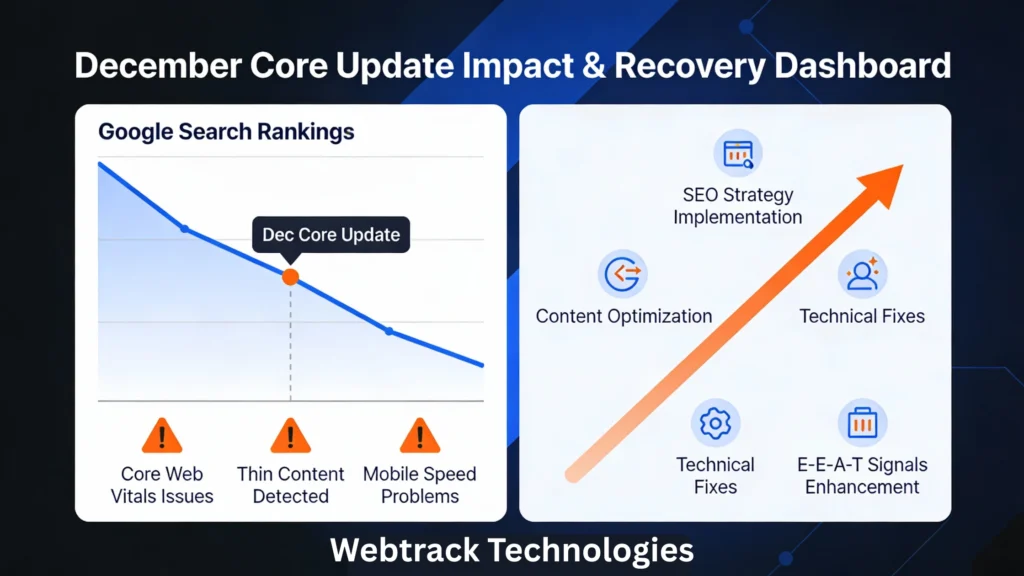
Google rolled out its December Core Update in late 2025, sparking discussion among website owners and marketers. This update refines how search algorithms evaluate content quality, user satisfaction, and site performance, influencing business website rankings. If you run a business site, understanding these shifts helps maintain or improve visibility. In today’s competitive digital landscape, partnering with a reliable digital marketing service can help navigate these changes effectively. This blog explores the update’s effects, common impacts, and practical strategies to adapt. You’ll gain actionable steps to protect your site’s position and grow traffic, leads, and sales. What Is the December Google Core Update? The December Google Core Update is one of Google’s periodic algorithm refreshes to improve search result relevance. Unlike targeted updates on spam, core updates adjust foundational ranking signals. It emphasizes helpful, people-first content amid rising mobile use and AI-driven searches. Google focuses on rewarding sites that deliver genuine value while addressing lower-quality content. Many sites experienced ranking shifts, especially those relying on outdated tactics. High-quality sites often held steady or improved. Key aspects include: Greater emphasis on fresh, authoritative content. Stronger focus on user engagement signals. Building on previous systems for better evaluation. Disclaimer: Update impacts vary by industry, site quality, and competition. Results shared here reflect general trends, not guarantees. Businesses that adapt proactively tend to recover faster. Key Changes in This Core Update This update tweaks core ranking factors like content freshness, expertise signals, and technical performance. Sites with outdated information or poor user experiences faced challenges, as noted in Google’s Search Central updates. AI-generated content receives closer review. While not banned, low-effort material without clear value may underperform. Many sites saw shifts based on content depth and originality. Main changes include: More weight on authentic, user-focused content. Better detection of manipulative tactics. Enhanced behavioral signals from user interactions. Regular site audits help business websites stay aligned with these priorities. Immediate Impacts on Business Website Rankings Business websites, especially e-commerce, service-based, and lead-generation sites, noticed changes quickly. Mid-sized domains often saw traffic fluctuations in the days following rollout. Competitive sectors like professional services and retail felt notable effects due to keyword saturation. Sites demonstrating clear expertise through author details and real examples performed better. Common patterns: Traffic shifts for affected pages. Internal competition is diluting page strength. Stronger sites are gaining ground. This serves as a reminder to build ranking resilience. Why Your Business Site Might Have Dropped Common issues include thin content lacking real value, which Google now prioritizes less. Comprehensive resources outperform short, generic pages. Duplicate material or technical problems add risks. Slow load times or mobile issues frustrate users, sending negative signals. Many affected sites struggled with basic performance benchmarks. Typical causes: Overuse of exact-match keywords. Weak internal linking. Missing structured data opportunities. Start with Google Search Console to spot issues and plan fixes. Building a Resilient SEO Strategy Post-Update Recovery begins with a solid SEO strategy covering content, technical elements, and off-page factors. Audit your site thoroughly and update key pages with fresh insights. Practical steps: Identify content gaps. Review top competitors. Schedule regular page refreshes. Showcasing expertise through team backgrounds and case studies strengthens trust. In our work with a local service business, these steps helped recover lost positions within two months. Optimizing Content for Long-Term Gains Content optimization requires depth and relevance to user needs. Create thorough guides that fully address questions, supported by visuals for better engagement. Focus on genuine experience and expertise. Build authority around key topics. Useful approaches: Aim for clear, readable writing. Include relevant examples. Track performance after updates. Quality content supports both rankings and conversions. Strengthening Technical SEO Foundations Technical SEO supports overall visibility. Address crawl issues, security, and indexing problems. Improve speed with basic optimizations like image resizing. Conduct site crawls to find fixes. Add structured data to improve search appearances. Core checklist: Check performance benchmarks. Fix duplicate content. Ensure reliable hosting. Reliable technical setup builds Google trust. Enhancing Local Visibility for Businesses Local SEO updates favor complete business profiles. Optimize your Google Business listing with photos, responses, and service details. Create location pages with relevant schema. Effective tactics: Encourage authentic reviews. Target nearby searches. Monitor local performance. These steps often boost local impressions. Boosting E-Commerce Site Performance E-commerce SEO benefits from fresh product details and smooth navigation. Write unique descriptions highlighting benefits. Use structured navigation and user feedback features. Key areas: Add product enhancements for better search results. Test page structures. Include customer reviews. Focused updates help stabilize e-commerce traffic. Mastering Backlink Building Safely Backlink building prioritizes quality links from relevant sources. Avoid low-value links that could harm profiles. Pursue guest opportunities, helpful resources, and partnerships. Regularly review your link health. Reliable methods: Outreach for relevant placements. Create shareable content. Collaborate with others. Strong profiles support lasting results. Perfecting On-Page SEO Elements On-page SEO refines individual pages for better relevance. Craft clear titles and descriptions with helpful language. Organize content logically. Add descriptive image text and smart internal links. Standards: Keep titles concise. Use clear heading structure. Include related terms naturally. These adjustments deliver noticeable improvements. Prioritizing User Experience Optimization User experience optimization influences engagement signals. Create simple navigation, prominent calls to action, and easy-to-scan layouts. Use tools to identify user friction. Make sites work well on all devices. Suggestions: Simplify forms. Add navigation aids. Tailor content where possible. Better experiences lead to stronger signals. Adopting Mobile-First Indexing Standards Mobile-first indexing means Google prioritizes mobile versions. Ensure responsive design with usable elements. Test mobile usability regularly. Basic guide: Proper scaling settings. Fast loading on slower connections. Performance audits. Mobile-friendly sites maintain stability. Improving Core Web Vitals Metrics Core Web Vitals track key user interactions like loading and stability. Aim for good scores across main pages. Optimize images, fonts, and code efficiency. Quick reference: Fastest content loading. Quick response times. Stable layouts. Sites meeting these often perform better. Preparing for Voice Search Optimization Voice search optimization prepares for conversational queries. Structure content for natural questions. Use question formats and quick answers. Preparation: Clear